
Cold-Chain Monitoring Case Study
Food Production & Cold-Chain Monitoring
A food producer's manual readings and scattered quality records were slowing down how fast anyone noticed a problem. Here's what happened, and how Comnexiom approaches cooler, freezer and storage monitoring tied to the network and the people who respond.
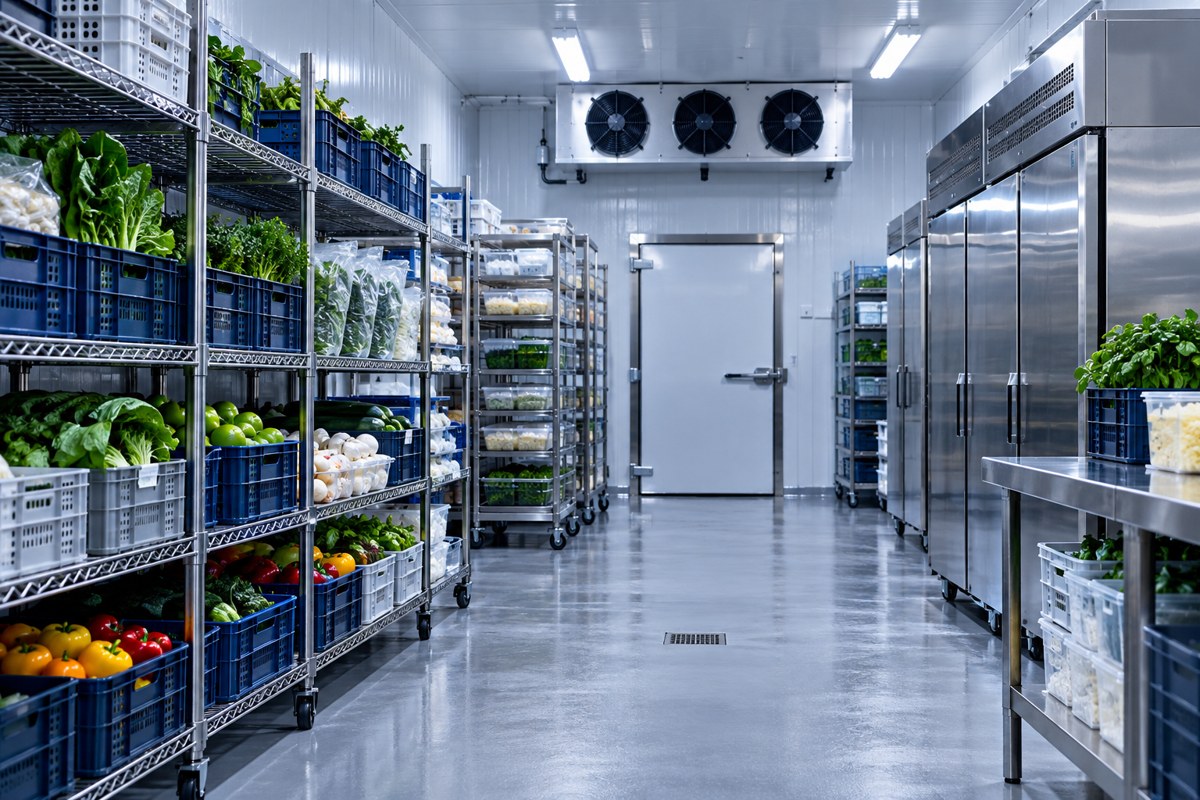
Follow the business consequence.
A food producer relied on manual readings and fragmented quality records, which delayed awareness of temperature and other environmental exceptions.
One operating problem. The relevant capabilities together.
- Monitor priority coolers, storage areas, doors, humidity, and water risks
- Confirm secure gateway access and reliable notifications
- Prepare draft exception and corrective-action records with AI assistance
- Define calibration, retention, escalation, and review responsibilities
WHAT THE PROJECT WORKED TOWARD.
- More consistent exception reporting
- Less repeated transcription
- Better coordination between quality, facilities, and IT
Outcomes depend on the environment, baseline, implementation, adoption, and ongoing operating discipline.
MANAGED IT FIRST. THE RIGHT ADD-ONS SECOND.
Comnexiom starts with Managed IT: secure gateway access, a reliable network and notifications that reach the right people. Cooler, freezer and storage monitoring is an IoT add-on, scoped and quoted on its own, with temperature history kept for quality records. Managed IT includes unlimited IT support on every plan, plus unlimited IT-only projects and on-site support with Complete Care, for one flat monthly fee. IoT, cameras, cabling and third-party services are not included and are scoped and quoted separately, and Microsoft 365, backups, hardware, software and licenses are sold separately.
See pricing & scopeSOURCES AND RELATED STORIES.
Make the exception route as useful as the reading.
Select one storage area
Choose a cooler or freezer, confirm suitable probe placement and document the current reading and response process.
Connect quality and maintenance
Agree thresholds and duration with the responsible team. Route the location, time and condition to a named responder with cover across shifts.
Reduce repeated transcription
A reviewed Digital Jedi workflow can prepare an exception record from approved data, flag missing fields and leave disposition decisions with qualified staff.
Define the baseline before the pilot.
Compare record completeness, repeated entry, notification delivery and response acknowledgement with the original process. Monitoring does not itself determine whether food is safe or demonstrate compliance.
Explore the relevant starting pointHAVE A SIMILAR PROBLEM? BOOK A JEDI FOR A COLD-CHAIN REVIEW.
Book a Jedi for your Free IT Risk Review: 30 minutes on Microsoft Teams with Jeff Davis. You leave with one priority risk, one practical opportunity, one clear next step and a short written summary. No scans, no system access, no obligation.